Happy Bins / Resources
The Science Behind Bin Cleaning: Heat, Water and Residue Removal
Bin cleaning works by removing what waste leaves behind: food particles, greasy films and dirty liquid. The science behind bin cleaning is the combined effect of heat, water movement, mechanical action and time. At Happy Bins Cleaning, purpose-built hot-water equipment and wastewater recovery help turn that process into a practical service for local homes and properties.
Why empty bins can still smell
Collection removes the bulk of the waste, but sticky organic residues can remain on the walls, lid and bottom of a bin. Microorganisms break down that material and release odor-producing compounds. Moist, compacted material with little oxygen can develop particularly unpleasant smells. Cornell University explains how oxygen affects decomposition and odors; the same basic biology helps explain why leftover organic material matters in a waste bin.
Removing the residue tackles an odor source instead of simply covering it with fragrance. Smell alone cannot tell you which microbes are present, and a fresh-smelling bin is not proof that it has been disinfected. Stains, worn plastic or damage may remain after cleaning.
What hot water does—and what a temperature rating does not prove
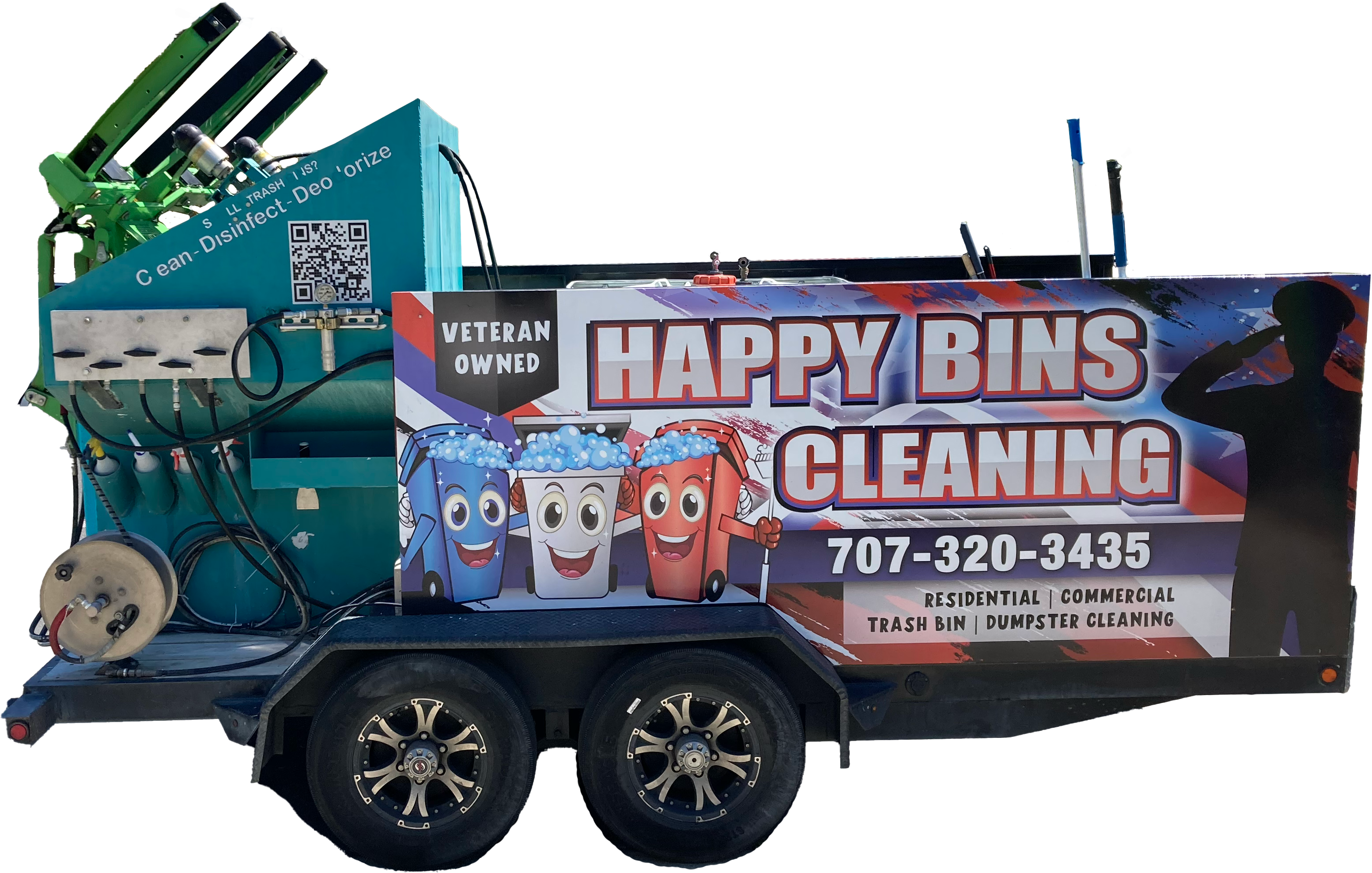
Happy Bins equipment has hot-water capability above 200°F. Heat helps loosen greasy buildup so it can be washed away. That equipment capability is not a guarantee that every part of a bin reaches or stays above 200°F. Water cools as it travels and contacts a cooler surface; weather, spray distance and exposure time also affect the result.
A heater setting or outlet temperature alone cannot establish sanitization. A defensible heat-treatment claim would need a validated combination of temperature at the surface and exposure time for the intended organisms and conditions. We do not claim sterilization or a specific percentage of microbes killed by routine bin cleaning.
Pressure, flow, time and mechanical action work together
Pressure helps the spray dislodge attached dirt. Flow is the amount of water delivered over time: it helps carry loosened material away. Mechanical action is the physical force of the water striking and moving across the surface. Coverage and time matter because a quick pass over one spot does not clean every other spot.
These factors have to work together. Heat can soften a greasy film, spray action can lift it, and rinsing can transport it out of the bin. Heavy or dried-on buildup may need additional attention. More pressure alone is not a promise of a better result; the method must suit the bin material and condition.
Cleaning, sanitizing and disinfecting are different
CDC distinguishes these three processes. Cleaning physically removes dirt, impurities and germs. Sanitizing reduces germs to levels considered safe by applicable public-health standards. Disinfecting uses products that kill remaining germs on surfaces. Cleaning is the first step because soil can interfere with later treatment.
When a chemical sanitizer or disinfectant is used, the product must be appropriate for the surface and purpose, with its label directions followed. Dilution and contact time matter: EPA explains that the surface must stay wet for the specified contact time. A rinse, pleasant scent or citrus ingredient does not by itself establish disinfection or chemical safety.
The benefit described here is removal of accumulated waste residue. Routine service should not be treated as a guarantee of a pathogen-free bin or protection from illness. Continue normal hygiene, including washing your hands after handling waste bins.
Where the dirty wash water goes
Loosening dirt is only part of the job; the resulting wastewater needs to be collected. Happy Bins uses a vacuum recovery system to collect dirty wash water into a dedicated onboard dirty-water tank for proper disposal. The recovered liquid contains the material removed from the bins and is kept separate from the clean-water supply.
This collection process helps keep dirty wash water from running into storm drains. It does not make the wastewater clean, and it does not establish a particular water- or energy-saving percentage. Those comparisons would require measurements under comparable conditions.
Why cleaning frequency matters
A bin begins collecting new residue as soon as it is used again. Regular cleaning limits how long that material accumulates. The right interval depends on food and organic waste, leaks, heat, moisture and how quickly odors or visible buildup return. There is no single scientifically required schedule for every household.
Monthly cleaning may suit heavier use; quarterly, semi-annual or one-time cleaning may fit other needs. Keep lids closed, avoid overfilling, and follow your collection provider’s rules for bagging waste and disposing of liquids. Tell us about unusual contents or heavy buildup before service. Empty bins and clear access help us carry out the cleaning.
Choose service for your bins or property
Explore residential bin cleaning and request service, or arrange a commercial Site Review for bins, dumpsters and waste areas. Share your location, bin count and collection day so Happy Bins can confirm availability and the appropriate next step.